

What is the difference between cylindrical roller bearings and taper roller bearings?
Bearings are fundamental components in many mechanical systems, playing a key role in ensuring smooth motion and supporting loads. While all bearings share the basic function of facilitating movement, their different designs allow them to handle specific tasks. Among the many options, Cylindrical Roller Bearings and tapered roller bearings are two widely used types designed to bear heavy loads. This article will explore the differences between these two bearing types, analyzing their unique structures, load capacities, applications, and performance factors to help users make the best choice.
Structural Differences: Cylindrical Rollers Bearings vs. Tapered Rollers Bearings
The design of a bearing significantly impacts its performance. Cylindrical roller bearings and tapered roller bearings differ in both appearance and structural purpose.
Cylindrical roller bearings are made of rollers shaped like small cylinders, with raceways that are parallel. They primarily bear radial loads. This design allows the bearing to exhibit high rigidity and stability at high speeds, effectively reducing friction and wear, thus maintaining high operational efficiency. Cylindrical roller bearings are typically used in equipment such as electric motors and gearboxes, suitable for applications requiring significant radial load handling.
In contrast, tapered roller bearings have raceways that are tapered, enabling them to handle both radial and axial loads simultaneously. This structure makes tapered roller bearings perform better in applications that involve substantial axial loads, such as automotive wheel hubs and heavy machinery. Due to the tapered design of the raceways, tapered roller bearings offer higher load-bearing capacity, making them especially suited for applications that require handling both significant radial and axial loads.
Key Structural Elements:
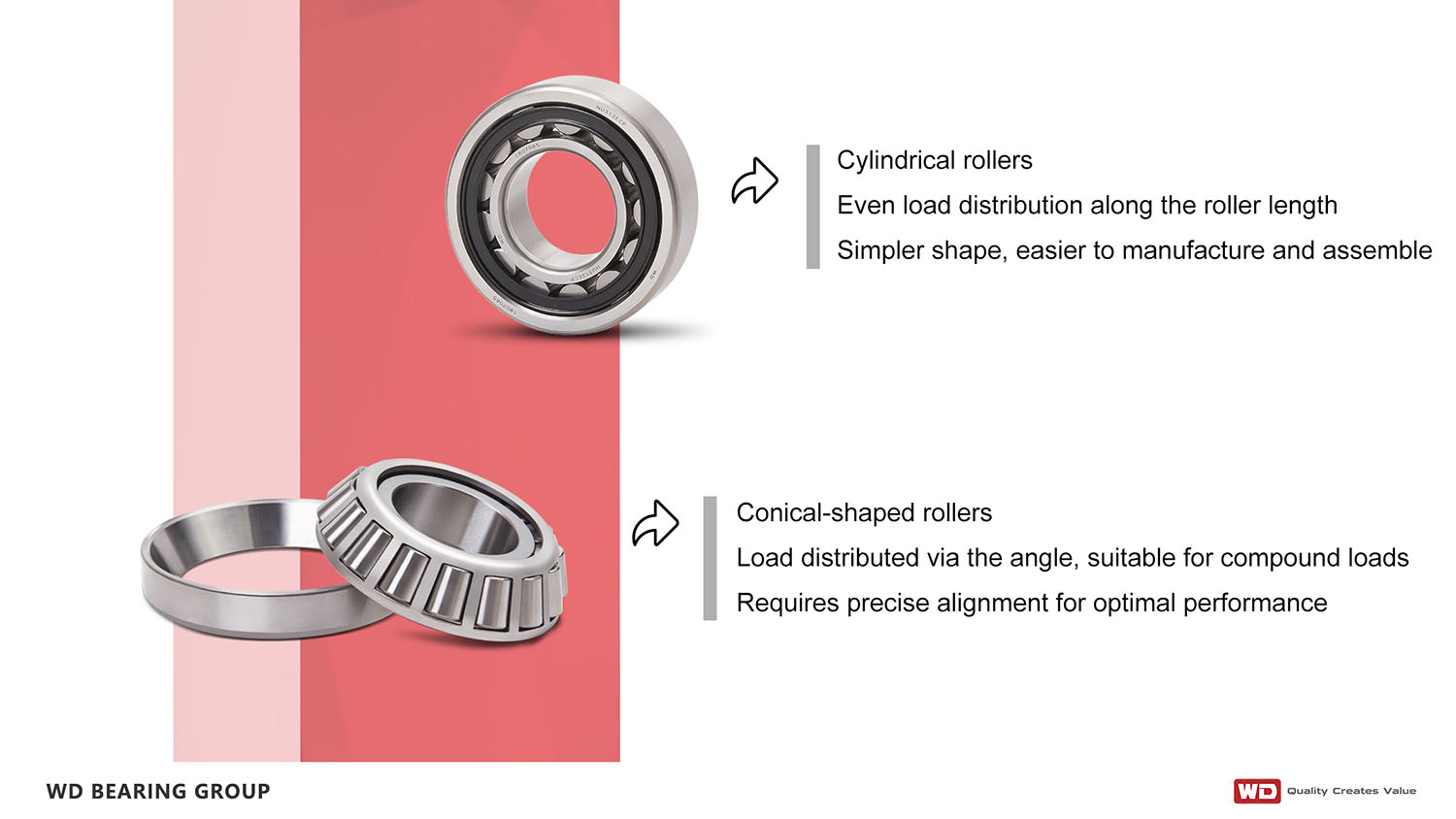
● Roller Shape and Contact Angle: Cylindrical roller bearings have cylindrical rollers, while tapered roller bearings have conical-shaped rollers.
● Load Distribution: Cylindrical roller bearings distribute the load evenly along the length of the rollers, whereas tapered rollers distribute the load via the angle, making them suitable for compound loads.
● Assembly Complexity: Due to their simpler shape, cylindrical roller bearings are easier to manufacture and assemble, while tapered roller bearings require precise alignment to maximize their performance.
Load Capacity: Radial Load vs. Compound Load
One of the main functions of a bearing is to support loads, but different applications impose different types of forces. Understanding how each bearing handles these forces is critical when choosing the right bearing.
Cylindrical roller bearings are optimized for handling radial loads, which are forces perpendicular to the bearing's rotational axis. Their design ensures that the load is evenly distributed along the contact lines of each roller, allowing them to withstand large radial loads without excessive wear. As a result, they are often chosen for applications like electric motors that primarily experience radial forces.
Tapered roller bearings, on the other hand, are designed to handle compound loads, which include both radial and axial (or thrust) loads. Due to their angular geometry, these bearings can support thrust loads along the axis of rotation, making them more versatile. This makes tapered roller bearings ideal for applications that require the simultaneous handling of radial and thrust loads, such as automotive axles and industrial machinery.
Load Dynamics in Different Environments:
● Radial Load-Only Environments: Cylindrical roller bearings perform well in environments with high radial stress but low thrust requirements.
● Compound Load Conditions: Tapered roller bearings are highly suitable for environments that experience both radial and axial loads, particularly in automotive and heavy machinery applications.
Applications
Cylindrical roller bearings and tapered roller bearings are widely used across several industries. While both share similarities, their advantages differ based on specific operational conditions and load demands. Selecting the appropriate bearing type is crucial.
Compressor Industry
Cylindrical roller bearings are commonly used in compressors to bear large radial loads, particularly in screw and centrifugal compressors, where they help reduce friction and enhance operational efficiency. Tapered roller bearings, however, are suitable for handling both radial and axial loads and are widely used in high-pressure, heavy-load compressors, providing higher stability and reliability.
Gearbox Industry
Cylindrical roller bearings are often used in high-speed transmission systems to bear large radial loads, making them suitable for the design of efficient gearboxes. Tapered roller bearings are used in gearboxes that need to handle both radial and axial loads simultaneously, especially in heavy-duty, high-impact environments where they provide stronger support.
Lifting Equipment Industry
In lifting equipment such as cranes and hoists, cylindrical roller bearings are used to bear radial loads, ensuring efficient operation. Tapered roller bearings, on the other hand, provide smoother support when handling both radial and axial loads, particularly excelling in heavy lifting tasks.
Agricultural Machinery Industry
Tapered roller bearings are widely used in agricultural machinery such as tractors and harvesters. Due to their ability to handle large compound loads, they perform reliably in harsh working environments, making them ideal for long-duration, high-load operations, enhancing the durability and efficiency of the equipment.
Automotive Industry
In the automotive industry, cylindrical roller bearings are used in high-speed rotating wheel hubs and drivetrains to reduce friction, improve fuel efficiency, and ensure smooth driving. Tapered roller bearings are used in drive systems to handle compound loads, ensuring smooth operation under heavy loads.
Characteristics of Each Bearing Type
While both types of bearings play crucial roles in functionality, understanding their individual characteristics helps ensure the selection of the right bearing for specific applications.
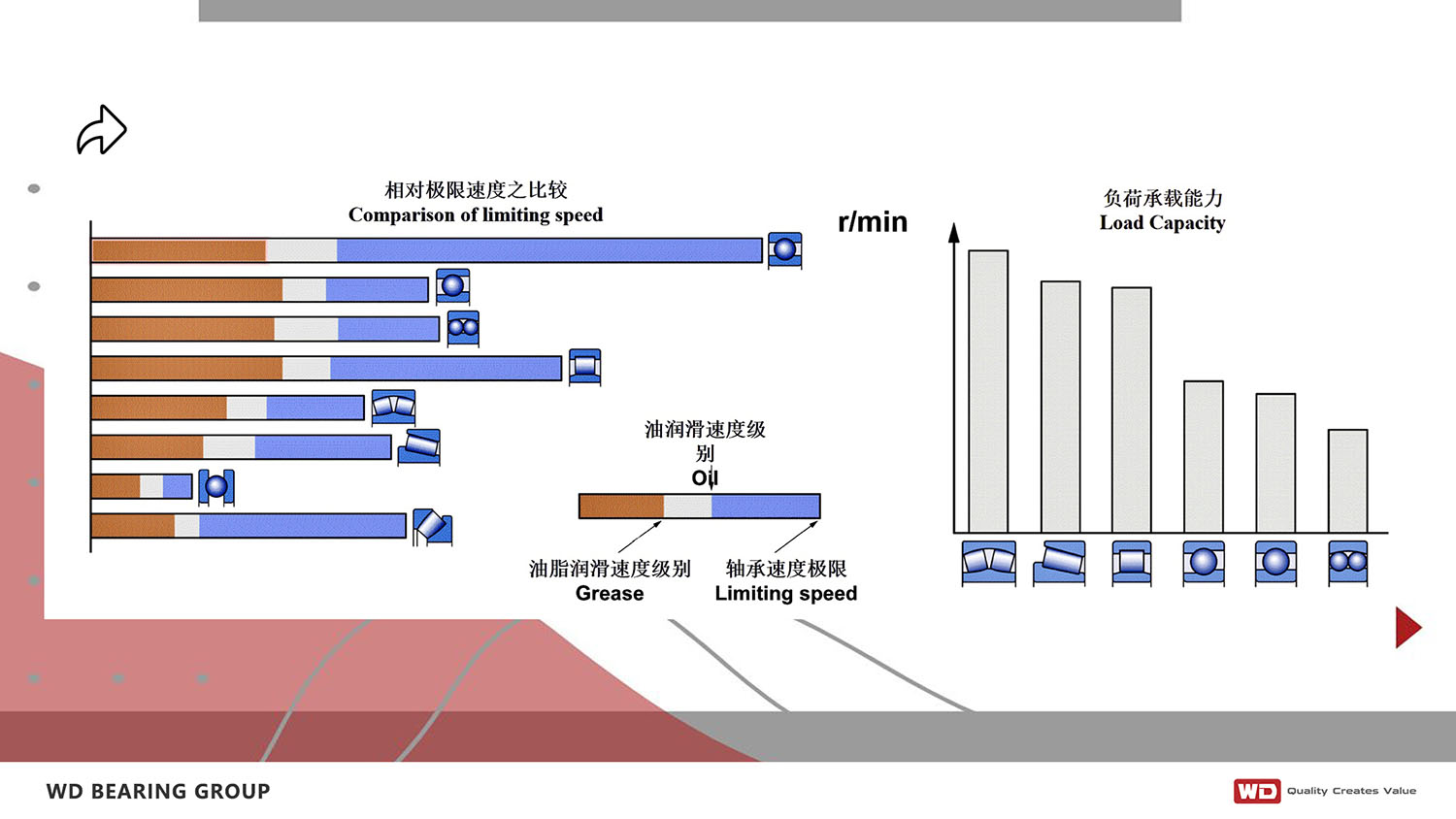
Characteristics of Cylindrical Roller Bearings:
● Lower speed compared to ball bearings of the same size.
● Higher precision.
● Lower noise and vibration levels.
● Primarily designed to bear radial loads.
● Bearings with flanges on both inner and outer rings can handle small axial loads.
Characteristics of Tapered Roller Bearings:
● High speed and precision.
● High rigidity and resistance to impact and vibration.
● Capable of withstanding significant axial loads.
Choosing the Right Bearing: Factors to Consider
Choosing the right bearing is not just about understanding its load capacity. Other factors, such as operating temperature, speed, expected lifespan, and maintenance requirements, play a crucial role in the selection process.
Key Considerations When Choosing:
● Type and Direction of Load: Pure radial loads are best suited for cylindrical roller bearings, while applications requiring both radial and axial loads should consider tapered roller bearings.
● Operating Speed: High-speed applications should use cylindrical roller bearings with low friction, while tapered roller bearings are suited for medium-speed, complex load scenarios.
● Environmental Conditions: In dusty, corrosive, or highly variable environments, the durability and ease of maintenance of the bearings need special consideration.