

What factors should be considered when choosing a bearing
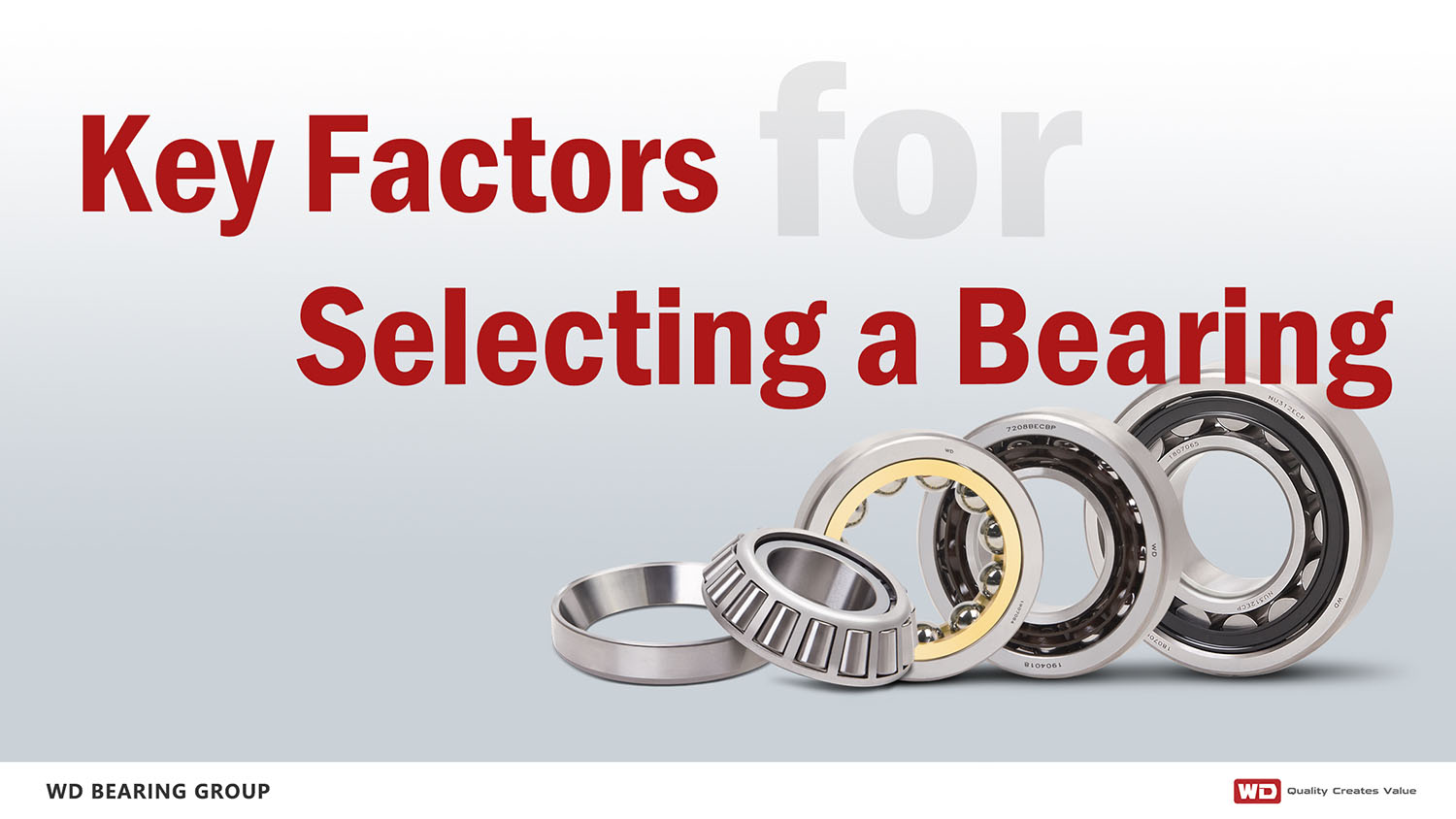
Key Factors to Consider When Selecting a Bearing
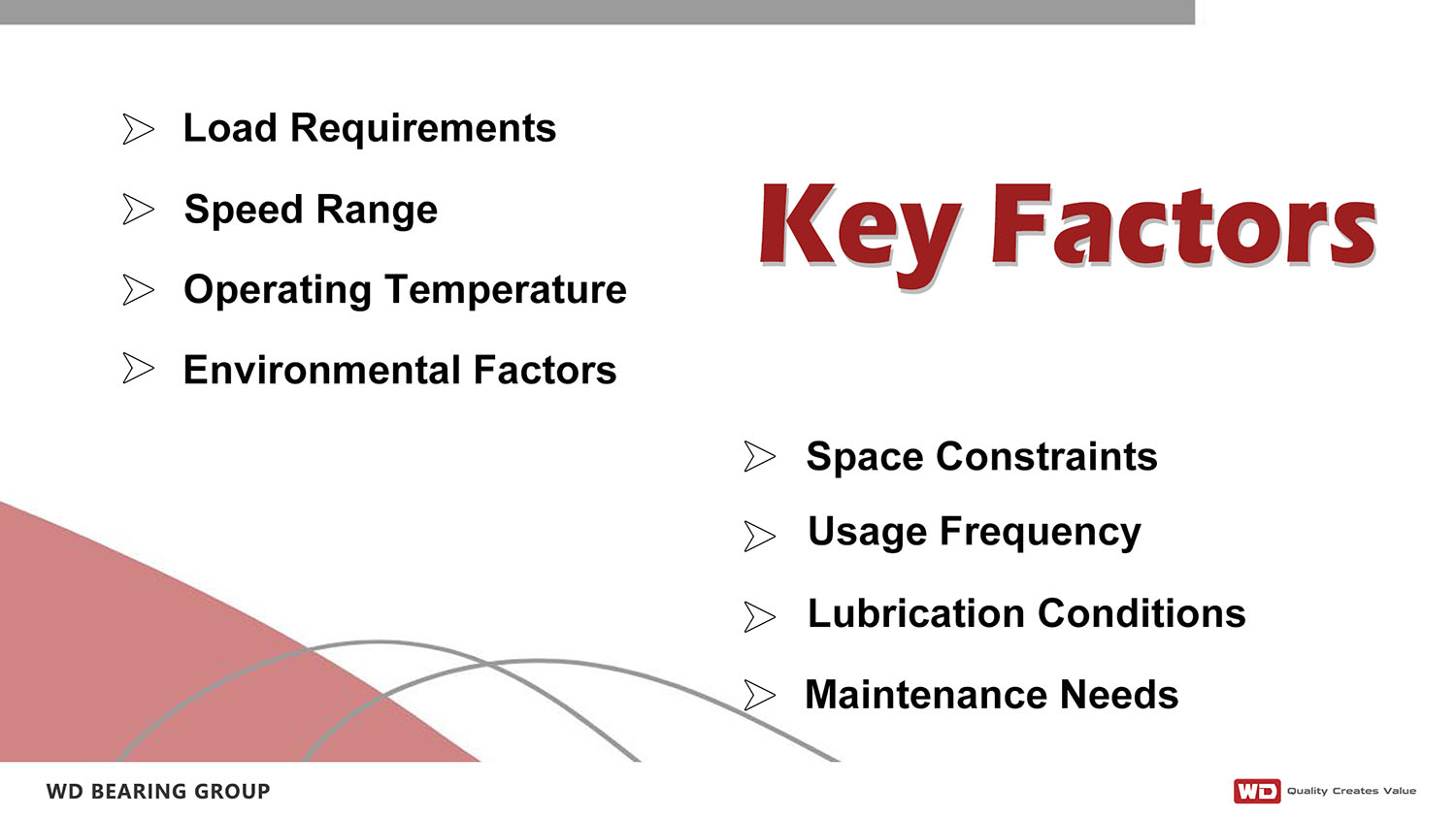
Bearings play a critical role in mechanical systems and industrial equipment, serving as essential components that facilitate motion while reducing friction between moving parts. Choosing the right bearing is vital to ensuring efficient operation, reliability, and longevity of equipment. A systematic evaluation of application conditions is necessary to select the most appropriate bearing type. This article outlines the key factors to consider when selecting a bearing, including load requirements, speed range, operating temperature, environmental conditions, space constraints, lubrication, usage frequency, and maintenance needs.
1. Load Requirements (Radial, Axial, and Combined Loads)
One of the first factors to evaluate when selecting a bearing is the type and magnitude of the load it will carry. Loads can be categorized into three main types:
● Radial Loads: These act perpendicular to the axis of the bearing shaft. Bearings that primarily handle radial loads include deep groove ball bearings and Cylindrical Roller Bearings. They are ideal for applications where the main force is directed toward the bearing’s outer and inner rings.
● Axial Loads: These loads act parallel to the axis of rotation, putting stress along the bearing’s shaft. Bearings such as Angular Contact Ball Bearings and thrust bearings are designed to accommodate axial loads efficiently.
● Combined Loads: In many industrial applications, bearings need to withstand both radial and axial forces simultaneously. This is referred to as a combined load. Bearings such as double-row angular contact ball bearings, tapered roller bearings, and spherical roller bearings are ideal for these conditions.
It is crucial to calculate the expected magnitude and direction of the load in the system accurately. For applications involving shock or fluctuating loads, bearings with greater strength and load capacity, such as roller bearings, are generally preferred.
2. Speed Range and Limitations
The operating speed of the system is another vital factor when selecting a bearing. Bearings operate at varying speeds depending on the application, and the selected bearing must be capable of handling the anticipated rotational speeds safely.
● High-Speed Applications: Ball bearings, such as angular contact ball bearings and deep groove ball bearings, are ideal for high-speed operations due to their low rolling resistance and smooth rotational capabilities. In addition, these bearings generate less heat and friction, which helps prevent premature wear.
● Low-Speed Applications: For equipment that operates at lower speeds but requires higher load capacities, roller bearings (e.g., cylindrical or spherical roller bearings) are more suitable. They provide increased load-handling performance without compromising durability.
It is essential to consider the limiting speed of the bearing, which depends on its design, lubrication, and material properties. Exceeding the limiting speed can result in excessive heat generation, lubrication failure, and eventual bearing damage.
3. Operating Temperature Considerations
Temperature directly affects the performance and longevity of a bearing. In extreme temperature environments, special considerations must be made regarding bearing materials, lubrication, and clearances.
● High-Temperature Applications: Bearings used in high-temperature conditions, such as furnaces or high-speed compressors, must be constructed with materials that can withstand thermal expansion and maintain their properties. Examples include bearings with ceramic rolling elements, high-temperature steels, or PEEK (Polyetheretherketone) cages. Additionally, high-temperature lubricants must be used to ensure proper lubrication.
● Low-Temperature Applications: Bearings operating in sub-zero temperatures, such as cryogenic environments, require materials with excellent low-temperature toughness. Standard steel bearings may become brittle, so alloys or specialized materials are often employed.
Thermal expansion and contraction also influence the internal clearances of bearings. Selecting the correct bearing clearance class (e.g., C3 or C4) ensures consistent performance under temperature fluctuations.
4. Environmental Factors and Sealing Requirements
The environment in which the bearing operates is critical in determining its performance and lifespan. Harsh operating conditions such as dust, moisture, chemicals, or abrasive contaminants require bearings with adequate protection.
● Contaminated or Dusty Environments: Bearings in such environments must incorporate effective sealing solutions. Contact seals provide superior protection but increase friction, while non-contact seals reduce friction but offer slightly lower protection.
● Moisture and Corrosive Environments: In humid or corrosive conditions, materials such as stainless steel bearings or bearings with special coatings (e.g., zinc or nickel plating) are preferred. In addition, bearings with waterproof seals or shields help protect the internal components from water intrusion.
● Clean Environments: Precision equipment in clean environments, such as medical devices or semiconductor manufacturing systems, requires bearings with minimal contamination and optimized lubrication to ensure high accuracy and low noise.
Environmental considerations directly affect the bearing’s lifespan and operational reliability, so selecting the right sealing configuration is vital.
5. Space Constraints and Dimensional Considerations
Available installation space often dictates the type and size of the bearing. Some applications, such as robotics, actuators, and compact machinery, require small, lightweight bearings, while others necessitate larger bearings to accommodate higher loads.
● Compact Spaces: In applications where space is limited, thin-section bearings, miniature bearings, or needle roller bearings are ideal. These bearings offer a compact design while maintaining sufficient load capacity.
● Large Bearings for Heavy Loads: For heavy-duty applications, bearings such as tapered roller bearings or spherical roller bearings are designed to handle large loads while maintaining dimensional accuracy.
In addition to size, dimensional tolerances must be considered to ensure a precise fit between the bearing and its housing or shaft. Proper installation and alignment are critical to achieving optimal performance and minimizing wear.
6. Usage Frequency
The frequency and duration of operation significantly impact bearing selection. Bearings subjected to continuous or intermittent operation must be chosen based on reliability, durability, and ease of maintenance:
● Continuous Operation: Bearings operating continuously, such as those in industrial machinery or power plants, must offer high durability, minimal wear, and efficient heat dissipation. Roller bearings and bearings with high-quality steel or ceramic components are commonly used for these applications.
● Intermittent Operation: Applications that require periodic stops and starts place different stresses on bearings. Bearings in such systems must be designed to handle shock loads during restarts and maintain consistent performance over time.
Assessing the application’s duty cycle and usage pattern will help ensure the correct bearing is selected to optimize reliability and minimize downtime.
7. Lubrication Conditions
Lubrication is one of the most critical factors influencing bearing performance, as it reduces friction, minimizes heat, and prevents wear. The selection of lubrication depends on speed, load, temperature, and environmental conditions.
● Grease Lubrication: Grease is ideal for medium-speed and moderate-temperature applications. It provides effective sealing and requires less maintenance compared to oil lubrication. Grease-lubricated bearings are often used in electric motors, fans, and conveyors.
● Oil Lubrication: For high-speed and high-temperature applications, oil lubrication is preferred. Oil reduces heat more efficiently than grease and ensures smooth operation. Bearings in turbines, compressors, and high-speed spindles often rely on oil lubrication systems.
● Solid Lubrication: In environments where liquid lubricants are impractical, such as extreme temperatures or vacuum conditions, solid lubricants such as graphite or PTFE are used. Solid-lubricated bearings are commonly found in aerospace and food processing industries.
Choosing the right lubrication method and maintaining proper lubrication intervals is vital to extending the lifespan of bearings and preventing premature failures.
8. Maintenance Needs and Cost-Performance Balance
Maintenance requirements play an essential role in bearing selection, particularly in terms of downtime, costs, and ease of servicing.
● Low-Maintenance Bearings: Applications where maintenance is difficult, such as remote installations or enclosed systems, benefit from sealed-for-life bearings or self-lubricating bearings. These bearings minimize the need for relubrication and reduce operational costs.
● Serviceable Bearings: Bearings that are easily disassembled and relubricated are ideal for equipment requiring regular maintenance. Bearings with lubrication holes or grooves are advantageous in such systems, as they allow for consistent and efficient relubrication.
Balancing performance with cost is critical in bearing selection. While high-performance bearings may have a higher initial cost, their reliability and extended lifespan can reduce long-term expenses related to maintenance, downtime, and replacement.
Conclusion
Selecting the right bearing is a complex process that requires careful consideration of multiple factors, including load requirements, speed, temperature, environmental conditions, space constraints, usage frequency, lubrication, and maintenance needs. Each application presents unique challenges, and the proper bearing type must be chosen to optimize performance, reliability, and cost-efficiency.
By evaluating these key factors systematically, engineers and equipment operators can ensure that bearings operate efficiently under diverse conditions, ultimately extending equipment life and reducing total ownership costs. As technology and materials continue to evolve, selecting the most suitable bearing solutions will remain a critical aspect of modern industrial operations.