

What are the different types of bearings?
Definition and Importance of Bearings
Rolling bearings are precision mechanical components that convert the sliding friction between the rotating shaft and bearing housing into rolling friction, significantly reducing frictional losses. Their primary functions include reducing friction, supporting the workpiece, bearing radial loads, axial or combined loads, and axial positioning.
Internal Structure of Bearings
The internal structure of a bearing generally consists of an inner ring, outer ring, rolling elements, and cage, commonly referred to as the four main parts. For sealed bearings, the lubricant and seal (or dust cover) are added, making it the six major parts.
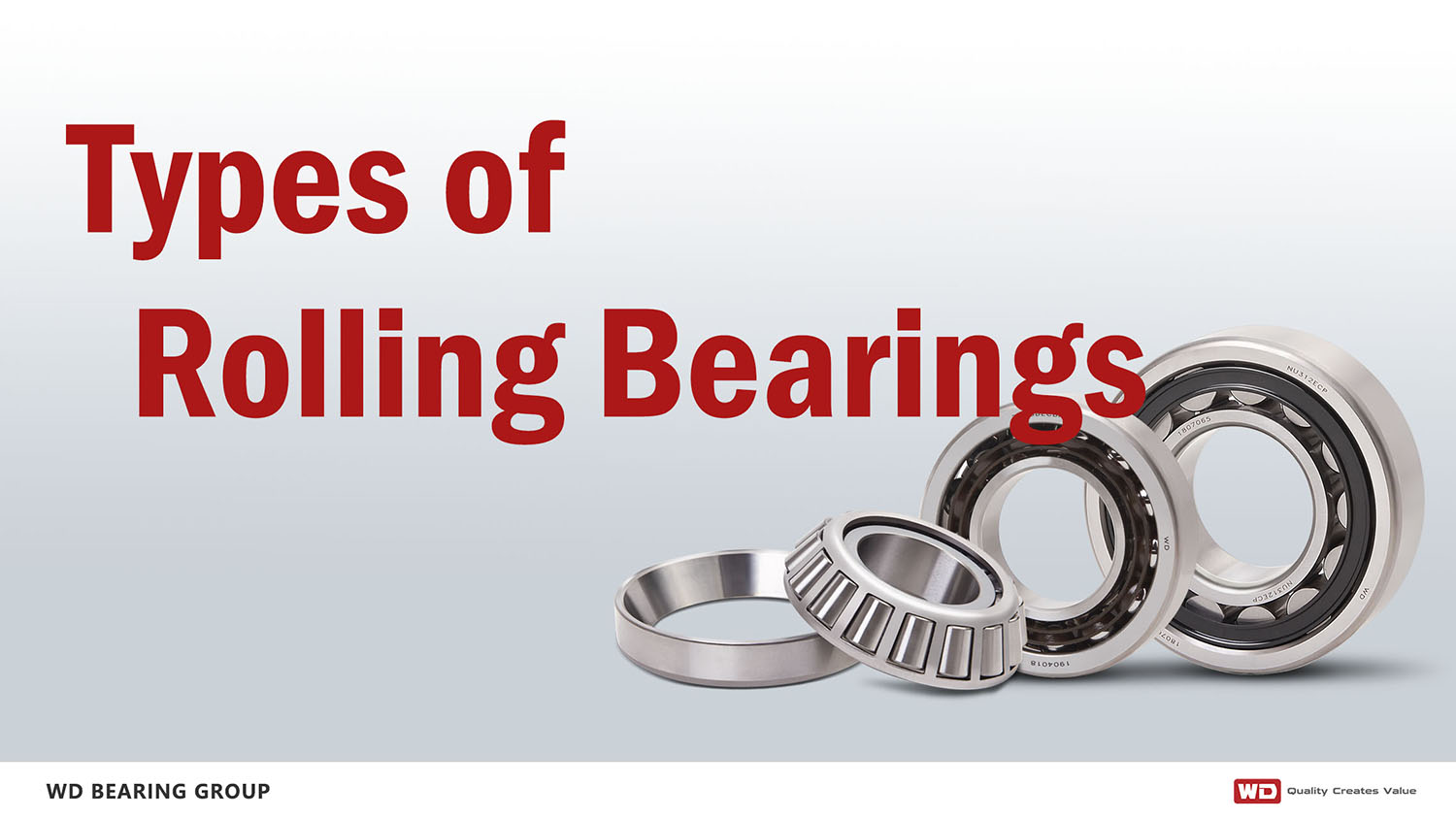
Classification of Bearings
1. Based on the Direction of Load
● Radial Bearings: Primarily bear radial loads, which are loads perpendicular to the axis. These bearings are designed to effectively support rotating shafts and reduce radial friction.
● Thrust Bearings: Specifically designed to withstand axial loads, which are parallel to the axis. Thrust bearings ensure the stability of the shaft under axial forces and prevent axial displacement.
2. Based on the Type of Rolling Element
● Ball Bearings: The rolling elements are spherical and are suitable for high-speed rotation and applications requiring low friction. Ball bearings have the advantages of a simple structure, light weight, and ease of maintenance.
● Roller Bearings: The rolling elements are rollers (e.g., Cylindrical Rollers, tapered rollers, etc.), capable of bearing larger radial and axial loads. Roller bearings are designed for higher load capacity and better stability.
3. Specific Types of Bearings
Based on the above classifications, we can further subdivide into specific types of bearings, including but not limited to:
● Deep Groove Ball Bearings: One of the most common types of ball bearings, known for its simple structure and good rotation performance. They are suitable for high-speed rotation and low-friction applications and primarily bear radial loads.
● Ball Thrust Bearings: Specifically used for bearing axial loads, these ball bearings have the advantages of a simple structure, light weight, and easy maintenance.
● Angular Contact Ball Bearings: A type of ball bearing with a contact angle, capable of bearing certain axial loads, and suitable for high-speed rotation and applications requiring high precision.
● Spherical Roller Bearings: A type of roller bearing characterized by low rotational speed, impact resistance, and vibration resistance. It features self-aligning capabilities, making it suitable for heavy loads and applications with significant vibration, as it can bear substantial radial loads and moderate axial loads.
● Cylindrical Roller Bearings: Compared to ball bearings of the same size, they operate at lower speeds but offer higher precision, reduced noise, and lower vibration. They are primarily designed to handle radial loads.
● Tapered Roller Bearings: A type of roller bearing capable of supporting large radial and axial combined loads. It is ideal for applications requiring high load capacity and excellent stability.
● Cylindrical Roller Thrust Bearings: These bearings operate at lower speeds and are designed solely to handle unidirectional axial loads. They offer high load capacity and stability, making them suitable for heavy loads and applications requiring precise positioning.
● Spherical Roller Thrust Bearings: These bearings operate at lower speeds, are impact-resistant, and can only bear unidirectional axial loads. They feature self-aligning capabilities and are ideal for applications that frequently require angle adjustments while handling significant axial loads.
Key Considerations When Choosing Bearings
When selecting bearings, several factors must be considered to ensure they meet the specific needs of the application. The following are key points to keep in mind:
1. Load Characteristics: Determine the type of load (radial, axial, or combined) and its magnitude, which is the basis for selecting the bearing type.
2. Speed Requirements: For high-speed equipment such as turbines or motors, low-friction and high-precision bearings are preferred.
3. Operating Environment: Environmental conditions (such as temperature, humidity, lubrication, dust, etc.) affect the choice of bearing materials and sealing design.
4. Durability and Maintenance: In high-maintenance cost or hard-to-reach scenarios, long-life bearings are ideal.
5. Size and Installation: Ensure the bearing size is compatible with the equipment design, and consider ease of installation and removal.
The Importance of Correct Bearing Selection
The selection of bearings directly impacts the efficiency, reliability, and lifespan of the equipment. A suitable bearing not only enhances equipment performance but also reduces failure rates and maintenance costs. For example, using low-friction bearings in high-speed equipment can significantly reduce energy consumption, while selecting high-load capacity roller bearings for heavy-duty equipment can prevent premature failure.
Conclusion
Understanding the types of bearings and their characteristics is crucial for mechanical design, manufacturing, and maintenance. From the high-speed performance of ball bearings to the heavy-load capacity of needle bearings, each bearing type offers unique advantages and application scenarios. Correct bearing selection ensures that equipment runs efficiently and maintains long-term stability and performance. With technological advancements and the application of new materials, bearing performance will continue to improve, providing broader support to the industrial sector in the future.