
From Pumps to Compressors: Selecting the Ideal Bearing for Fluid Handling Equipment
Fluid handling equipment such as pumps and compressors are indispensable machinery in various industrial sectors. Their efficient operation hinges on a critical component—the bearing. Bearings not only serve as the foundation for efficient equipment operation but also play a pivotal role in reducing energy consumption and extending equipment lifespan. This article provides an overview of the different types of bearings commonly used in pumps and compressors, explores the key factors influencing bearing selection, and highlights typical applications and maintenance practices to ensure durability and reliability.
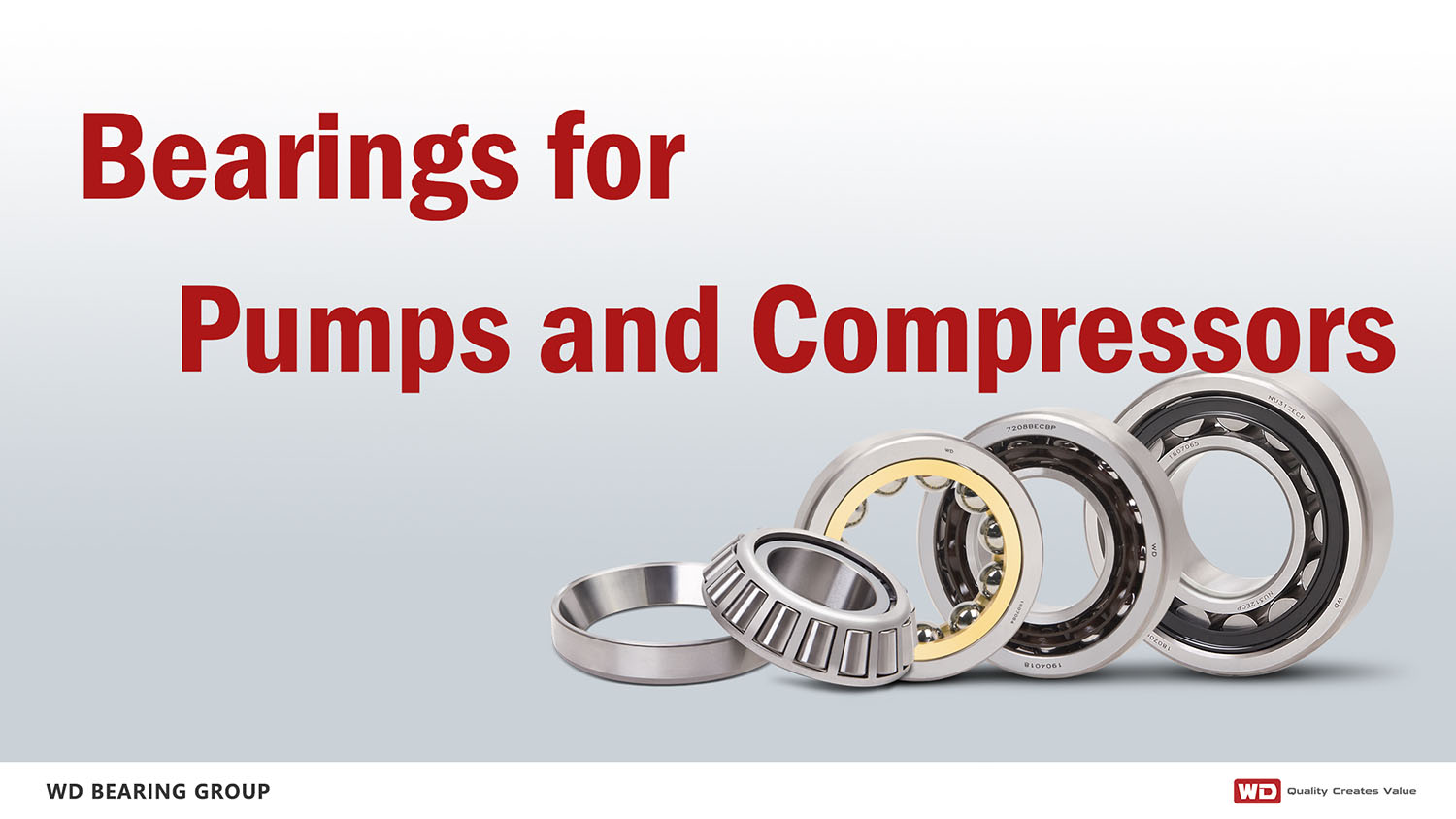
Common Types of Rolling Bearings in Pumps and Compressors
Deep Groove Ball Bearings
Deep groove ball bearings are among the most widely used rolling bearings due to their simple design, low friction coefficient, high load capacity, and versatile sealing options. Compact and easy to install and maintain, they are well-suited for high-speed applications, reducing energy consumption and temperature rise under proper lubrication. These bearings primarily handle radial loads but can also accommodate some axial loads. Single-row deep groove ball bearings perform exceptionally at high speeds, while double-row designs cater to higher combined loads. They are commonly used in circulating water pumps, household booster pumps, small compressors, and fans, excelling in quiet operation, high efficiency, and minimal friction loss.
Renowned for their high load capacity and durability, cylindrical roller bearings feature line contact between the rollers and raceways, enabling them to withstand significant radial loads. They perform reliably under high temperatures and high-speed conditions, with their separable design simplifying installation and maintenance. Though less impact-resistant than spherical roller bearings, they are widely utilized in industrial compressors, large pumps (e.g., petrochemical pumps), and mining machinery, offering stable and dependable support.
Angular contact ball bearings provide a combination of radial and axial load-bearing capabilities, making them ideal for precision and rigidity-focused applications. Single-row designs are suitable for high-speed operations, while double-row configurations handle greater axial loads. Their performance can be further optimized by adjusting the contact angle. These bearings are commonly found in high-performance compressors, chemical pumps, motors, and turbines, ensuring high precision and stability for diverse applications.
Spherical Roller Bearings
Spherical roller bearings excel in applications with significant alignment errors or load misalignments due to their self-aligning capabilities. Their strong vibration resistance makes them suitable for heavy-load and impact-prone scenarios, effectively extending their service life. These bearings are particularly effective in vibration pumps, mining machinery, industrial pumps, and papermaking equipment.
Tapered Roller Bearings
Tapered roller bearings are designed to handle combined radial and axial loads with high positioning accuracy. The cone-shaped contact between the rollers and raceways ensures uniform pressure distribution, allowing them to support substantial combined loads. Single-row designs suit high-speed applications with smaller axial loads, while double-row configurations provide greater load capacity and stability. These bearings are widely used in oilfield pumps, industrial compressors, and transmission equipment, offering reliable support for complex conditions.
Key Factors Influencing Bearing Selection
Load
The type and magnitude of the load a bearing must support are crucial considerations. Radial, axial, or combined loads directly influence the type of bearing chosen. For instance, heavy-duty applications in compressors often require robust roller bearings, while light-load pumps may benefit from ball bearings.
Speed
Operating speed affects friction, temperature rise, and bearing life. High-speed applications demand low-friction and precision bearings, such as angular contact ball bearings, whereas low-speed, high-load conditions are better suited to roller bearings.
Fluid Type
The medium being handled—whether water, chemical solutions, or oil—significantly impacts bearing selection. Equipment in chemical environments requires corrosion-resistant materials, while water-handling applications benefit from sealed bearings to prevent moisture ingress.
Environmental Conditions
Factors such as temperature, humidity, and contaminants greatly affect bearing performance. High-temperature applications may necessitate bearings with PEEK cages, while humid environments call for corrosion-resistant coatings.
Typical Applications in Different Industries
Water Treatment Industry
In wastewater treatment plants and water supply systems, pumps are used to transport water or chemical reagents. These applications typically require corrosion-resistant bearings, such as coated roller bearings, to ensure long-term stability in humid environments.
Oil and Gas Industry
Compressors in the oil and gas sector handle gas transmission or boosting under high-temperature and high-pressure conditions. Durable cylindrical roller bearings or magnetic bearings are often preferred.
Food and Pharmaceutical Industry
Pumps and compressors in these industries must meet stringent hygiene standards, with bearings designed to prevent lubricant contamination. Sealed ball bearings with food-grade lubricants are commonly employed.
Energy Industry
Cooling pumps and compressors in wind power and nuclear facilities often face extreme operating conditions, necessitating bearings with exceptional fatigue resistance and long service life.
Maintenance Practices: Ensuring Bearing Longevity and Reliability
Regular Lubrication
Using the right lubricant for the operating conditions is essential to minimize friction and prevent wear. High-temperature applications require heat-resistant greases.
Vibration and Temperature Monitoring
Vibration analysis and temperature monitoring can help identify potential issues early, allowing for preventative measures. Digital monitoring technologies are increasingly adopted in this area.
Cleaning and Sealing
Preventing contaminants like dust or moisture from entering the bearings is crucial for reliable operation. High-quality sealing structures and regular cleaning significantly enhance durability.
Scheduled Replacements
While high-performance bearings generally have long lifespans, timely replacement upon reaching their fatigue limit prevents unplanned downtime.
Conclusion
Selecting the ideal bearings for pumps and compressors requires a comprehensive consideration of load, speed, fluid type, and environmental conditions. Each type of bearing has unique advantages and applications, enabling optimal performance and extended service life while reducing maintenance costs. Scientific maintenance practices are the cornerstone of reliable bearing performance.
As experts in the bearing industry, we are dedicated to providing comprehensive technical support and high-quality bearing products to meet diverse industry needs. Whether in water treatment, oil and gas, or food and pharmaceutical sectors, our bearing solutions strike the perfect balance between reliability and performance.