

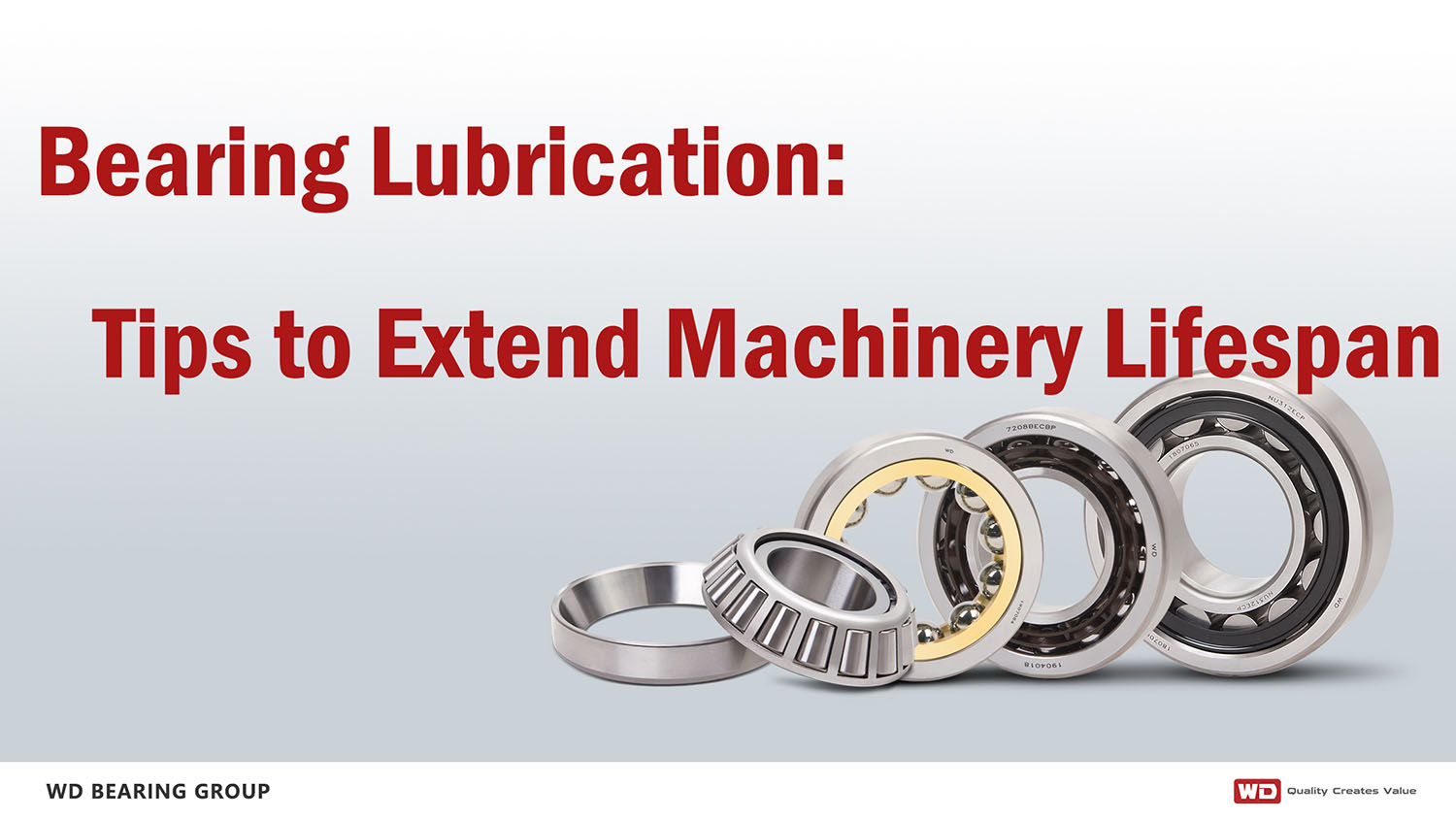
Bearing Lubrication: Best Practices for Extending Machinery Lifespan
Bearings play a critical role in a wide range of machinery, ensuring smooth and efficient operation. However, their performance and lifespan often depend on the lubrication system. Proper lubrication not only reduces friction and wear but also prevents corrosion, maintains cleanliness, and extends the lifespan of both bearings and related machinery. This article explores the importance of bearing lubrication, the selection of lubricants, and lubrication schedules recommended for various operating conditions.
The Importance of Bearing Lubrication
Bearings, as key components in machinery, support rotating or sliding parts, enabling efficient and stable operation. In this process, lubrication is essential. It reduces friction and heat buildup, preventing direct contact between metal surfaces. This minimizes wear and fatigue, thereby prolonging bearing lifespan.
Poor lubrication management may lead to the following issues:
● Increased Friction and Wear: Insufficient lubrication in bearings causes direct metal contact, increasing friction and accelerating wear.
● Overheating: Bearings lacking proper lubrication are prone to overheating under heavy loads, leading to lubricant degradation and accelerated damage.
● Corrosion: In humid or corrosive environments, inadequate lubrication allows moisture to penetrate, causing surface corrosion.
Therefore, effective lubrication management is vital for the stable operation of bearings and machinery.
Core Challenges of Lubrication
To ensure the designed lifespan of rolling bearings, maintenance teams must address four main lubrication challenges: incorrect lubricant, contaminated lubricant, over-lubrication, and under-lubrication.
Importance of Lubricant Selection
The choice of lubricant must consider equipment load and operating conditions. Using the wrong lubricant may accelerate wear of bearing components or even cause failure. For instance, lubricants must have suitable viscosity and additive packages to provide oxidation protection, anti-wear, and anti-corrosion properties.
The Risks of Lubricant Contamination
Dust and moisture are common contaminants that significantly reduce bearing lifespan. Using filtration systems and seals effectively prevents contaminants from entering the bearings. Maintenance teams should regularly check lubricant purity and ensure that storage environments remain dry and clean.
Over-Lubrication and Under-Lubrication
Over-lubrication may increase bearing temperature and reduce its lifespan, while under-lubrication exacerbates friction, leading to component failure. Designing lubrication schedules must balance intervals and amounts, and operators should receive proper training to minimize human error.
Types of Lubricants and Their Applications
Lubricating oils and greases are the two most common lubricants, each with unique advantages and disadvantages. Selecting the right lubricant based on operating conditions is crucial.
Lubricating Oil
Lubricating oil is typically used in high-speed machine parts. Its excellent flow properties allow it to quickly reach friction surfaces and form an effective lubrication film. It also helps dissipate heat, preventing overheating. Lubricating oil is commonly applied in high-speed bearings, gear transmissions, and other demanding equipment.
Advantages:
● High flowability, suitable for high-temperature and high-speed environments.
● Effectively dissipates heat to keep equipment cool.
● Easy to replace and manage.
Disadvantages:
● Evaporates over time, requiring regular checks and replacement.
● May thicken in low temperatures, reducing flowability.
Lubricating Grease
Lubricating grease is a mixture of oil and a thickener, typically used in low-speed, high-load, or sealed machinery. Its strong adhesion prevents it from being easily displaced, making it ideal for long-term use or equipment requiring infrequent maintenance.
Advantages:
● Suitable for low-speed or heavily loaded bearings.
● Functions effectively in sealed environments, preventing contaminants.
● Adheres well to lubrication points, reducing replenishment frequency.
Disadvantages:
● High viscosity limits flowability, unsuitable for high-speed operations.
● Longer heat dissipation time may lead to overheating in high-temperature conditions.
By evaluating equipment speed, load, and sealing requirements, choosing lubricating oil or grease ensures optimal performance.
Recommended Lubrication Schedules Based on Operating Conditions
Lubrication frequency and intervals vary depending on equipment conditions. Common factors influencing lubrication schedules include:
● Temperature: High temperatures accelerate lubricant degradation, necessitating more frequent lubrication.
● Load: Heavily loaded equipment requires more lubrication to reduce friction and wear.
● Operating Environment: Machinery in humid, dusty, or corrosive environments needs stronger sealing and more frequent lubrication.
● Speed: High-speed equipment requires low-viscosity oil with shorter replacement cycles.
● Lubrication Method: Automatic lubrication systems provide real-time lubrication, but manual lubrication demands more frequent checks and replenishments.
Lubrication Schedule Recommendations:
● High-temperature, high-speed bearings (e.g., motors, fans): Inspect lubrication every three months and replace oil as needed.
● Heavily loaded bearings (e.g., gearboxes, heavy machinery): Conduct monthly lubrication checks to ensure lubricant quality.
● Extreme environment equipment (e.g., marine machinery, mining equipment): Check lubrication every two weeks and replenish as necessary.
● Sealed or hard-to-reach bearings (e.g., automotive hubs, agricultural machinery): Inspect every six months and replace grease according to equipment manuals.
Scientific and reasonable lubrication management effectively reduces equipment failure rates, extends service life, and improves production efficiency.
Conclusion
Bearing lubrication is not only key to extending equipment lifespan but also significantly enhances machinery stability and efficiency. Selecting the appropriate lubricant based on actual usage conditions and establishing a proper lubrication schedule helps businesses lower maintenance costs, reduce downtime, and optimize overall performance. Continuous optimization of lubrication strategies ensures long-term stable operation, safeguarding industrial production.