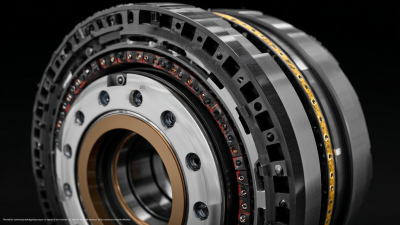
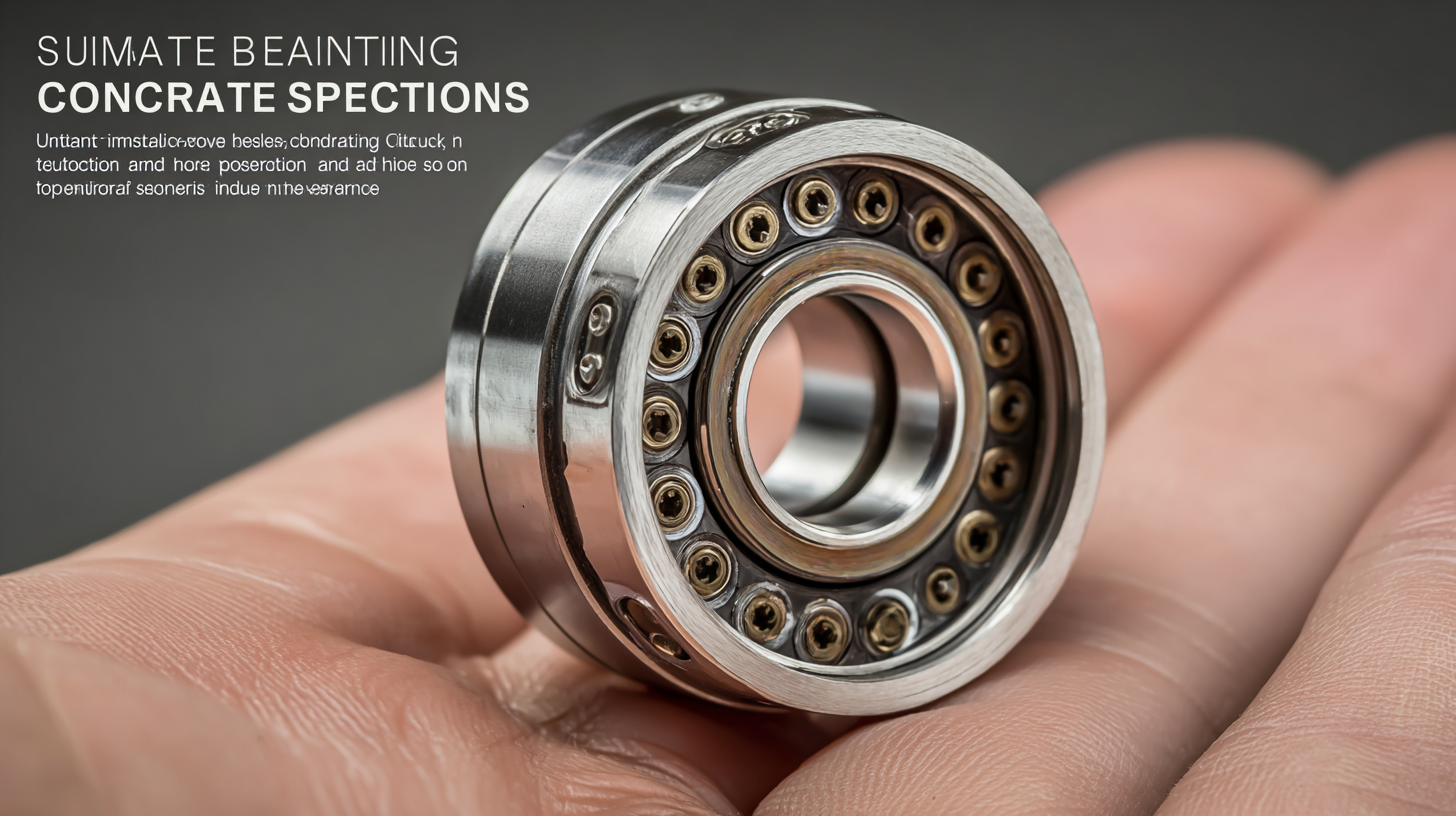
 Hey there! So, let’s chat about something pretty important in the crazy, fast-moving world of industry. You know how crucial it is to get the specs and the whole selection process right when it comes to Contact Bearings? It can really make or break performance, and, honestly, reliability is everything, especially in a bunch of different applications. I came across this market report recently that blew my mind: the global bearing industry is on track to hit over over $100 billion by 2025! Can you believe that? And a big part of that growth? Yep, you guessed it—Contact Bearings. They really play a vital role in boosting machine efficiency.
Now, if you haven't heard of WD Bearing Group, they're pretty much a big deal. They supply to OEMs across a ton of sectors—think material handling, agriculture, construction, and all those other heavy hitters. Their thing is all about picking out the right Contact Bearings that are just perfect for whatever operational needs you've got.
What’s cool is that they keep investing in advanced machining tech and hire skilled folks, too. WD Bearing Group is all in on delivering quality bearings that stand up to the tough demands of industries that really rely on precision and durability. Understanding the nitty-gritty of Contact Bearing specs not only helps you get the most out of your machinery but also keeps it running longer. This just goes to show how crucial it is to make those informed choices in today’s manufacturing game.
Understanding the Role of Contact Bearings in Industrial Applications
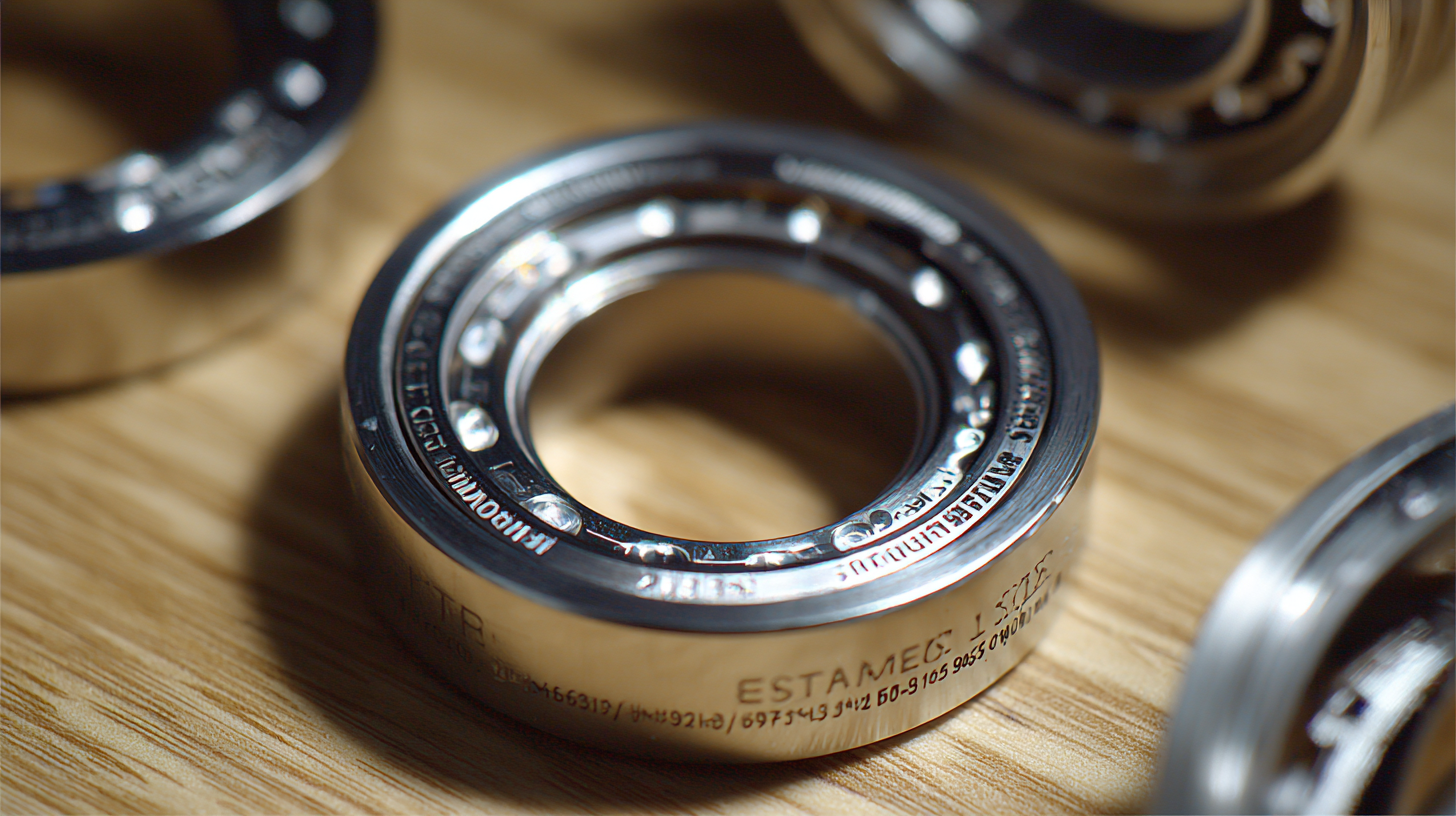
Contact bearings play a pivotal role in various industrial applications, particularly in machinery and automotive sectors where reliability and performance are crucial. The deep groove ball bearings and Angular Contact Ball bearings are among the most commonly used types, recognized for their ability to handle both radial and axial loads effectively. In the context of the European ball bearings market, which was valued at USD 4.92 billion in 2019 and is projected to reach USD 5.50 billion by 2027, manufacturers are increasingly focusing on innovative designs and materials to enhance bearing performance, ensuring longer life and reduced maintenance costs.
Recent advancements in bearing technology, especially in hybrid materials like Aluminum-Carbon nanotube composites, demonstrate significant improvements in mechanical properties and durability. Research has shown that integrating hexagonal boron nitride (h-BN) can bolster these properties, making hybrid bearings a promising solution for high-performance applications. Additionally, the development of nanoenhanced biolubricants has gained traction, offering better heat transfer capabilities and lower wear rates, thereby extending the lifespan of roller bearings under fatigue loads. These innovations highlight the vital role contact bearings play in improving efficiency and reliability across diverse industrial applications.
Ultimate Guide to Understanding Best Contact Bearing Specifications and Selection Process
| Bearing Type | Load Rating (kN) | Operational Speed (RPM) | Material | Lubrication Type | Temperature Range (°C) |
| Angular Contact Bearing | 15.0 | 5000 | Chrome Steel | Grease | -20 to 120 |
| Deep Groove Ball Bearing | 24.0 | 6000 | Stainless Steel | Oil | -40 to 150 |
| Thrust Bearing | 12.0 | 3000 | Bronze | Grease | -10 to 120 |
| Spherical Roller Bearing | 30.0 | 2000 | Carbon Steel | Oil | -20 to 130 |
Evaluating Key Specifications: Load Capacity, Material, and Dimensions
Choosing the right contact bearings can be a bit tricky, but it’s super important to really get a handle on key specs like load capacity, materials, and sizes. So, load capacity basically tells you the maximum weight a bearing can take without crapping out, and you’ll usually see it in terms of dynamic and static load ratings. The American Bearing Manufacturers Association (ABMA) points out that these ratings can differ quite a bit depending on what type of bearing you’re dealing with— roller bearings, for instance, tend to handle way more load than ball bearings. This is a big deal in places where there's a lot of stress happening, like in cars or heavy machinery.
Then there's the material choice, which is huge when it comes to how well your bearings perform and how long they last. You've got options from super-strong steels to fancy composites or ceramics, each with their own perks. Steel bearings are generally great for load and durability, but watch out—they can rust in some environments. On the flip side, ceramic bearings are awesome for high-speed use because they generate way less friction and heat. In fact, a report from Global Industry Analysts mentions that the thirst for ceramic bearings is set to rise, especially in cool fields like aerospace and medical devices.
Quick Tip: Always think about where the bearing is going to be used! If it’ll be around moisture or nasty chemicals, going for stainless steel or ceramic will really help keep it going strong. Also, make sure the sizes match up perfectly with the space you’ve got, or you might end up with some premature failures or efficiency headaches down the line.
Factors Influencing Bearing Performance: Friction, Speed, and Temperature
When it comes to picking the right contact bearings, there are a few things you really need to keep in mind if you want them to perform well. Friction, speed, and temperature are the big players here. I read this report from the International Journal of Mechanical Engineering that really nailed it—friction is super important because it has a direct impact on how efficiently a bearing system runs. If friction goes up, you’re looking at more energy loss and that can really crank up the heat, which is a bummer for bearing wear and tear. The good news is, good lubrication can help with all that friction, but you’ve got to pick the right lube depending on your operational conditions to get the best performance out of it.
Speed is another big deal when you’re choosing bearings. I found a study from the Society of Tribologists and Lubrication Engineers (STLE) that mentioned how important bearing speed is for thermal performance. The faster the speed, the more heat you end up generating because of those frictional forces. So you have to make sure you’re choosing bearings that can handle those speeds efficiently while also being able to deal with heat dissipation.
And let’s not forget about temperature stability; it’s crucial if you want your bearings to last. There’s this report from the American Bearing Manufacturers Association (ABMA) that stresses how bearings need to withstand certain temperature ranges without losing their material strength or lubrication effectiveness. That way, they can keep running reliably across all sorts of applications without a hitch.
Global Market Trends: The Demand for Quality in Chinese Manufacturing
You know, in the last few years, there’s been a pretty big change in the global market when it comes to how seriously folks are taking quality in manufacturing—especially regarding what’s coming out of China. As companies around the world start sourcing more of their parts from there, they’re getting a lot pickier about what they want, particularly when it comes to things like contact bearings. Everyone seems to be on the hunt for top-notch materials and precision engineering. I mean, whether it’s for cars or heavy machinery, the need for reliability and performance is just skyrocketing.
But this shift isn’t just some passing trend; it’s really a bigger industry shift toward making products last longer and cutting down on failures. To keep up with this demand, Chinese manufacturers are stepping up their game, investing in the latest tech and making sure they get those international quality certifications. It’s a smart move—not only does it help meet local needs, but it also helps them compete on a global scale. And as customers become more savvy about what quality means for bearing specifications, you can bet that manufacturers who focus on quality are going to come out on top. They’re likely to build solid long-term partnerships and earn customer loyalty, which is what everyone really wants.
Best Practices for Selecting Bearings: A Step-by-Step Guide
When you're trying to pick out the best contact bearings, it’s super important to really understand the specifications and how to choose the right ones. I mean, did you know that a report from the International Organization for Standardization (ISO) found that picking the wrong bearings can actually lead to about 30% of machinery failures in industrial settings? That’s pretty eye-opening! It really shows just how crucial it is to stick to best practices when selecting them. Some key things to keep in mind are load ratings, the materials used, and the environmental conditions. If you can make sure that the bearings you choose match the specific needs of your operation, you'll definitely see a boost in both reliability and how long your machinery lasts.
So, here’s a handy step-by-step approach for selecting bearings effectively. First off, you need to nail down what your application requires—like figuring out whether you’re dealing with radial or axial loads and what your expected service life looks like. Then, don’t hesitate to check out industry standards, like those from the American Bearing Manufacturers Association (ABMA). They’ve got some great guidance on what types and sizes of bearings you should be considering. Plus, a study from the Society of Tribologists and Lubrication Engineers (STLE) suggests that pairing the right lubricant with the bearing can really help cut down on friction and wear, which improves performance even more. By following these tips, companies can make smarter choices that really help boost the efficiency and durability of their machines.
Future Innovations in Bearing Technology and Their Industry Impact
You know, the future of bearing technology is really gearing up for some exciting breakthroughs that are about to shake things up across all kinds of industries. With the rapid rise of artificial intelligence and automation, we're seeing some cool changes in bearings specifically made for robotics and precision machinery. These newfound sophisticated designs are all about boosting efficiency and performance. So, it's super important for businesses to keep their finger on the pulse of these emerging technologies that can seriously enhance their operations.
When you're picking out bearings, just remember to think about what you actually need for your application and the snazzy tech advancements that are out there. For folks in the
automotive and
aerospace sectors, shelling out for high-performance bearings can really pay off in terms of reliability and efficiency. And don’t forget to keep an eye out for new materials and those
self-lubricating options – they could help cut down on maintenance costs and give a longer life to your components.
Oh, and let's not overlook the growing buzz around sustainability and eco-friendly designs! This is definitely influencing how bearings are being made. These days, manufacturers are under more pressure than ever to lower their environmental footprint, so weaving sustainable practices into the bearing selection process is a must. Companies should definitely team up with suppliers who are focused on using eco-friendly materials and processes; it’s a smart move to stay ahead in this ever-changing market.
Understanding the Benefits and Applications of Precision Angular Contact Bearings in Modern Engineering
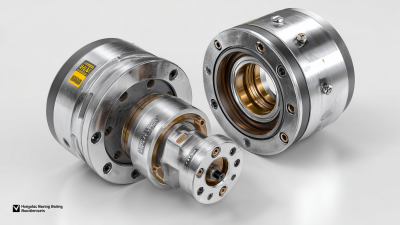
Precision Angular Contact Bearings play a crucial role in modern engineering, particularly in applications requiring high accuracy and reliability. These specialized components are designed to effectively manage both radial and axial loads due to their unique raceway geometry, which is typically angled between 15° and 40°. This specific design not only facilitates precise axial positioning but also supports high-speed rotation, making them indispensable in environments such as spindle systems, robotics, and aerospace. Their ability to minimize runout and vibration is paramount in critical applications where performance and safety are at stake.
One standout in this category is the WD Edge precision angular contact bearing, which offers significant advantages over conventional bearings. With high axial stiffness, these bearings maintain precise shaft alignment even under heavy thrust loads, ensuring machining accuracy is upheld. Designed with an optimized cage and low-friction materials, they excel in high-speed performance, generating less heat at elevated RPMs. Furthermore, the manufacturing precision adhering to ISO P4/P2 classes guarantees minimal radial and axial runout, enhancing overall system efficacy.
Customization is another hallmark of the WD Edge bearings, allowing for versatile arrangements such as back-to-back, face-to-face, or tandem configurations to optimize load distribution. Crafted from premium materials like M50 steel or ceramic, coupled with advanced surface coatings, these bearings extend service life significantly—reportedly by up to 300%—making them an exceptional investment for industries demanding long-term reliability and precision.
FAQS
: Contact bearings, such as deep groove ball bearings and angular contact ball bearings, are crucial in industrial applications due to their ability to handle both radial and axial loads effectively, ensuring reliability and performance in machinery and automotive sectors.
The European ball bearings market was valued at USD 4.92 billion in 2019 and is projected to reach USD 5.50 billion by 2027.
Recent advancements include the use of hybrid materials like Aluminum-Carbon nanotube composites and the integration of hexagonal boron nitride (h-BN) to enhance mechanical properties and durability in bearings.
Nanoenhanced biolubricants provide better heat transfer capabilities and lower wear rates, which can extend the lifespan of roller bearings under fatigue loads.
The performance of contact bearings is influenced by friction, speed, and temperature, all of which play vital roles in determining efficiency and longevity.
Increased friction leads to greater energy losses and excessive heat generation, which can contribute to bearing wear and failure; effective lubrication is essential to reduce friction.
Bearing speed affects thermal performance, as higher speeds generate more heat due to increased frictional forces, necessitating the selection of bearings that operate efficiently at those speeds.
Temperature stability ensures that bearings can withstand specific temperature ranges without compromising material integrity or lubrication properties, which is essential for reliable operation.
The selection of lubricants should be based on operational conditions to optimize performance and reduce friction effectively.
The ball bearing market is expected to grow from USD 4.92 billion in 2019 to USD 5.50 billion by 2027, indicating a focus on innovation and improved bearing performance.