Contact Bearings are pretty much the unsung heroes in a lot of machines we use daily. They support the moving parts and help keep things running smoothly by cutting down friction. I came across a report from Market Research Future that says the global market for contact bearings is expected to grow at a steady rate—about 6.2% annually—up until 2025. That’s a sign that industries like auto and aerospace are really craving dependable components.
James Thompson, who’s quite the expert in bearing tech at Precision Bearings Inc., puts it simply: ‘The quality of contact bearings has a direct impact on how efficiently your machinery works.’ It’s a good reminder that choosing the right bearing for your specific needs isn’t just a toss-up—it’s crucial for everything to run smoothly.
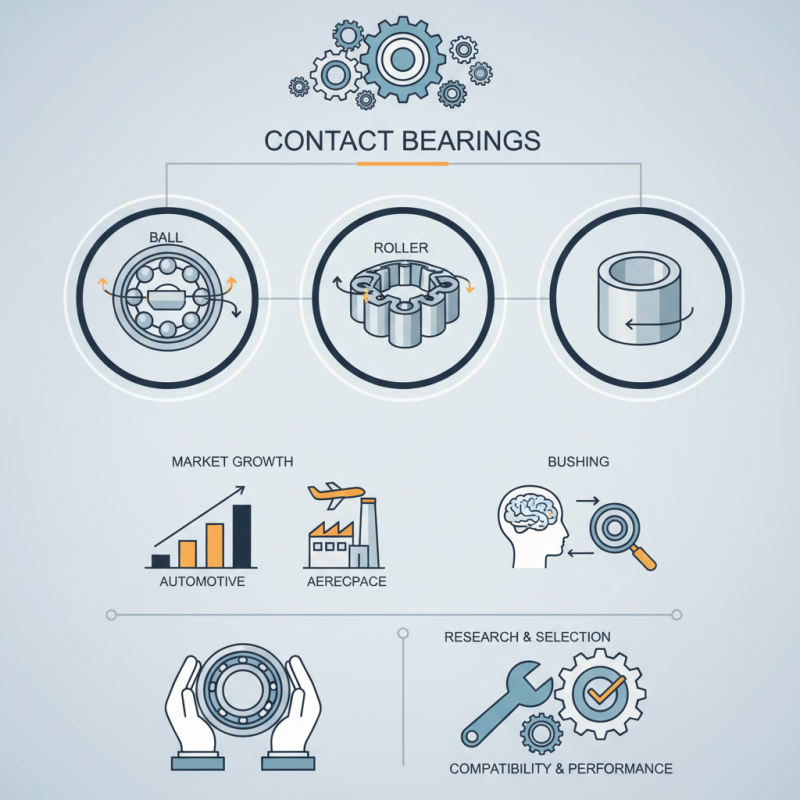
Honestly, diving into the world of contact bearings can feel a bit overwhelming. There are ball bearings, roller bearings, bushings—you name it. Each one serves a different purpose, and if you don’t do your homework, it could lead to some pretty serious operational hiccups. Making sure they match what you need and perform well is super important. So, for manufacturers and engineers out there, recognizing these challenges is part of the job, and planning ahead can save a lot of headaches later on.
Types of Contact Bearings: An Overview of the Industry
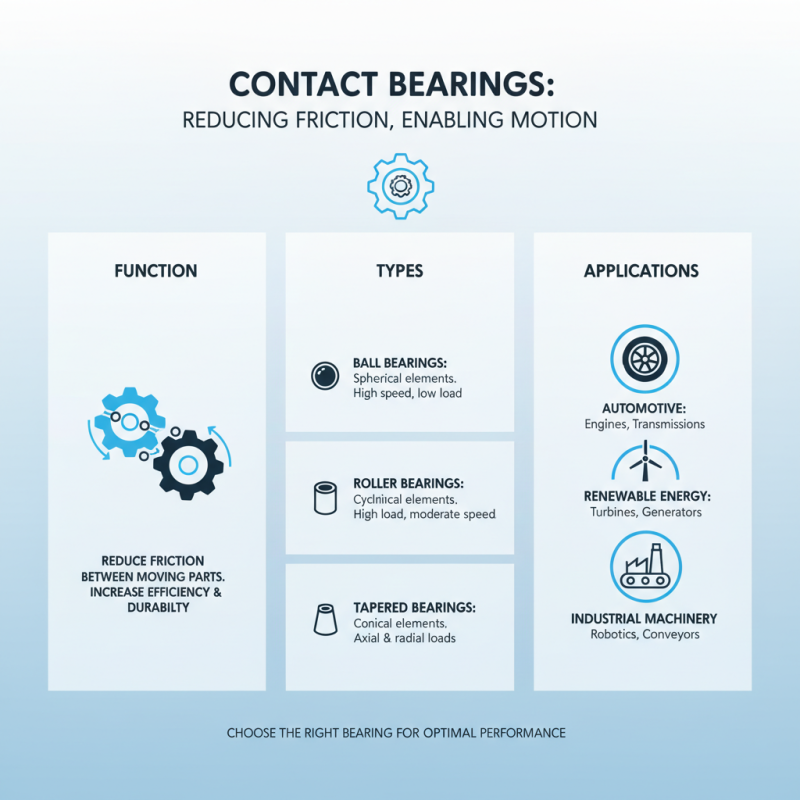
Contact bearings play a crucial role in various industries. These components reduce friction between moving parts. They come in different types, each with unique characteristics. Understanding these types can help in selecting the right component for specific applications.
One key type is the ball bearing. It uses spherical balls to maintain the separation between moving parts. This design minimizes friction and allows for smooth rotation. Another type is roller bearings, which utilize Cylindrical Rollers. They can bear heavier loads but may create more friction. According to industry reports, the demand for these bearings is expected to grow significantly, with a projected increase of 5% annually. This highlights the importance ofBearing Contact in machinery.
Tip: Regular maintenance can prevent bearing failure. Check for signs of wear and tear every few months. This simple practice can extend the lifespan of your equipment. Additionally, consider the operational environment. Factors like temperature and contamination can impact performance. Choose a bearing type that suits these conditions for optimal efficiency.
Understanding Radial and Axial Load Bearing Capabilities
When it comes to bearings, understanding their load capabilities is essential. Bearings can handle radial and axial loads differently. Radial loads act perpendicular to the shaft, while axial loads are parallel. Knowing this difference helps in selecting the right type for your application.
Tips for choosing Contact Ball Bearings include considering the direction of the load. If your machinery experiences mostly radial loads, opt for those specifically designed for that purpose. However, when both types of loads are significant, a combination bearing may be beneficial. Assess the size and weight of the components involved too.
It's important to remember that each bearing type has its limits. Overloading a bearing can lead to premature failure. Regularly inspect your equipment to ensure optimal performance and address any signs of wear and tear. This preventive measure can save costs in the long run while maintaining efficiency. Balancing between load capacity and application specifics is a constant challenge. Choosing the right contact ball bearing may require some trial and error.
Comparison of Ball Bearings and Roller Bearings in Application
When comparing ball bearings and roller bearings, it's essential to consider the specific application. Ball bearings consist of spherical balls, which help reduce friction. These bearings are best for applications requiring high speeds and low noise levels. They work well in motors and electrical devices. However, they can be less effective under heavy loads.
On the other hand, roller bearings use cylindrical rollers. They are designed for applications with higher load capacities. Roller bearings excel in supporting heavier loads while maintaining stability. You often find them in machinery and heavy equipment. It's worth noting that roller bearings may not perform as well in high-speed applications compared to ball bearings.
Choosing the right bearing is not always straightforward. Each type has its strengths and weaknesses. For instance, the increased surface contact in roller bearings can lead to more friction. This is a key consideration in high-speed settings. Evaluating the specific needs of an application is vital. This decision can significantly impact performance and longevity.
Exploring Thrust Bearings: Design and Load Characteristics
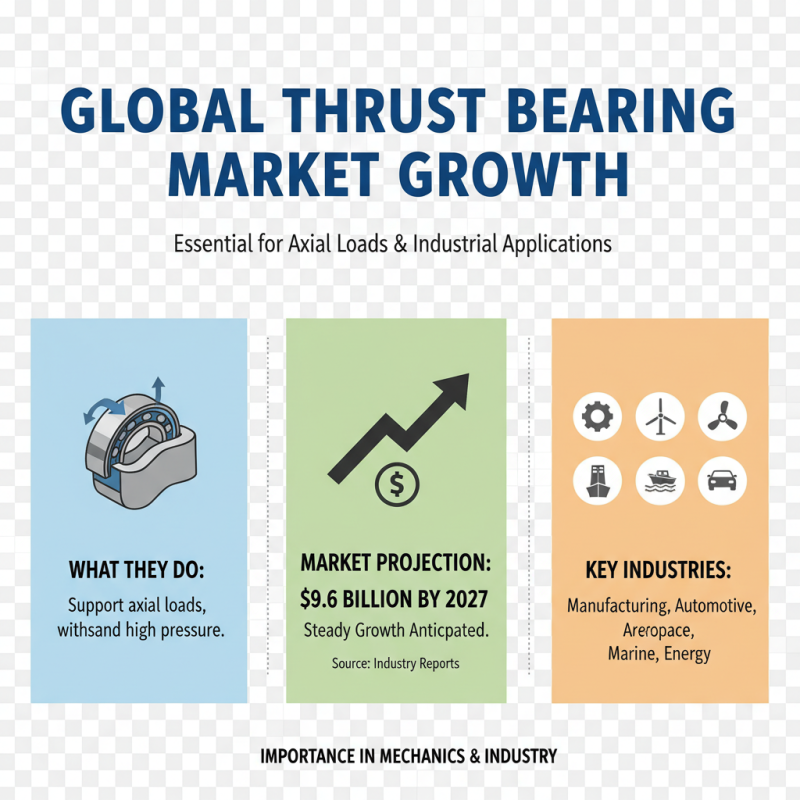
Thrust bearings are essential in various mechanical applications. They help support axial loads, which are forces directed along the shaft's axis. These bearings must withstand significant pressure. Reports indicate that the global thrust bearing market is expected to grow steadily, with projections reaching $9.6 billion by 2027. This growth underscores their importance in numerous industries.
The design of thrust bearings often varies. Some have a flat surface, while others employ balls or rollers to reduce friction. A study showed that thrust bearings can operate under loads exceeding 100,000 pounds, depending on their material and design. However, not all designs are optimal. Some face premature wear and failure. This can lead to costly downtime for machinery.
Load characteristics are crucial when selecting thrust bearings. High-speed applications demand precise tolerance and robust materials. However, many engineers overlook the need for regular maintenance. Without it, performance declines, leading to unexpected breakdowns. Reports suggest that maintenance neglect contributes to 30% of bearing failures in industrial settings. This statistic highlights the need for ongoing evaluation and improvement in bearing management practices.
Material Selection in Contact Bearings: Steel vs. Ceramic Options
When considering material selection in contact bearings, two main options emerge: steel and ceramic. Steel bearings are commonly used due to their resilience and cost-effectiveness. They perform well in many applications, but they can corrode if exposed to moisture. Their fatigue life can also be limited under high loads. Regular maintenance is required to keep them functioning optimally.
On the other hand, ceramic bearings, like the Angle Contact Ball Bearing, offer impressive advantages. They are lighter and have a lower friction coefficient. This results in increased speeds and efficiency. However, they can be more brittle than steel. If not handled properly, they may crack under stress. This is a significant consideration for heavy machinery or high-impact scenarios. Choosing between steel and ceramic mainly depends on the specific demands of your application. It’s crucial to weigh the pros and cons of each material to make an informed decision.
Comparison of Contact Bearing Materials: Steel vs. Ceramic
Lifespan and Performance Metrics of Different Bearing Types
Contact bearings come in various types, each designed for specific applications. Their lifespan and performance metrics differ significantly. Factors such as load capacity, material, and lubrication play vital roles in determining how long a bearing lasts. For example, ball bearings often excel in light-load applications, while roller bearings are better for heavier loads. A ball bearing may last thousands of hours under normal conditions, but this can drop significantly if misalignment occurs.
Another key aspect is the operating environment. Bearings used in corrosive or high-temperature areas often wear out faster. Poor lubrication can lead to increased friction, shortening their lifespan. While some contact bearings may perform admirably in ideal settings, real-world conditions can introduce unpredictability. It's crucial to monitor wear and replace bearings proactively to avoid unexpected failures. This acknowledgment of potential shortcomings allows for better maintenance strategies and more informed choices in bearing selection.
What Are the Different Types of Contact Bearings? - Lifespan and Performance Metrics of Different Bearing Types
| Bearing Type | Lifespan (hours) | Load Capacity (N) | Operating Temperature (°C) | Performance Rating |
| Ball Bearings | 1500 - 20000 | 500 - 6000 | -20 to 120 | Excellent |
| Roller Bearings | 8000 - 20000 | 1000 - 8000 | -20 to 150 | Very Good |
| Magnetic Bearings | 10000 - 30000 | Variable | -40 to 200 | Outstanding |
| Fluid Bearings | 20000 - 50000 | Variable | -30 to 200 | Excellent |
| Sleeve Bearings | 3000 - 15000 | 200 - 3000 | -20 to 120 | Good |
Recent Innovations in Contact Bearing Technology and Trends
In recent years, contact bearing technology has seen remarkable advancements. Innovations have focused on improving efficiency, durability, and noise reduction. One notable trend is the development of materials that withstand extreme conditions. These materials enhance performance in harsh environments, making them ideal for various applications.
There has also been a push towards precision engineering. Angular Contact Ball Bearings are becoming more refined. Their design now allows for better load handling and reduced friction. This shift translates to smoother operation in machines. However, implementing these high-tech bearings requires careful planning and understanding of their specifications.
Tips: Always assess your application needs before choosing a bearing. Insufficient knowledge can lead to poor performance. Regularly inspect and maintain your bearings to ensure longevity. Keep an eye on innovations in the field; technology evolves quickly and can offer unexpected benefits. Be open to experimenting but remain conscious of your limitations. Decisions made without adequate information might lead to setbacks.
Global Market Insights and Trends in Precision Angular Contact Bearings: Analyzing Demand, Applications, and Future Growth Projections
Precision Angular Contact Bearings are integral components in various industries, designed to efficiently manage combined radial and axial loads. With their specific raceway inclinations, typically ranging from 15° to 40°, these bearings facilitate precise axial positioning and allow for high-speed rotation. Their applications extend across several domains, including spindle systems maintenance, robotics, and aerospace engineering. These bearings excel in ensuring minimal runout and vibration, critical features for high-accuracy operations.
The technological advancements in precision angular contact bearings have led to products with high axial stiffness, which are essential for maintaining shaft alignment under significant thrust loads. This capability is crucial for ensuring machining accuracy, as even minor misalignments can significantly affect performance. Additionally, innovations in cage design and materials reduce friction, enabling high-speed performance while minimizing heat generation during operation. These bearings are manufactured to strict specifications, adhering to ISO P4/P2 classes that guarantee exceptional radial and axial runout values, making them ideal for applications requiring meticulous control.
Future growth in the precision bearing market appears robust, driven by increasing demand in high-tech industries. The customizable arrangements of these bearings—allowing them to be configured in back-to-back, face-to-face, or tandem setups—help optimize load management for diverse applications. Coupled with advancements in material technology, such as the use of premium steel and innovative surface coatings, these bearings boast significant enhancements in service life, reducing fatigue and maintenance needs. As industries continue to evolve, the role of precision angular contact bearings in ensuring efficiency and accuracy will only become more pronounced.
FAQS
: This product aims to enhance daily productivity and simplify tasks.
Individuals, professionals, and small businesses can find it useful.
Follow the provided instructions. Regular practice is key to mastery.
Yes, initial usage may feel challenging. Persistence will lead to improvement.
Often, users overlook certain features. This leads to underutilization.
Yes, it supports various integrations. Check compatibility before proceeding.
Users can share thoughts through designated channels. Your input matters.
Yes, assistance is accessible. Response times may vary, though.
Some advanced features may require additional setup. Always review specifications.
Results differ by user. Reflect on your approach and adjust as needed.
Conclusion
Contact bearings play a crucial role in various mechanical applications by enabling efficient movement and load management. This article provides an overview of the different types of contact bearings, including radial and axial load capabilities. It highlights the key differences between ball bearings and roller bearings, focusing on their unique applications and performance attributes.
Moreover, the article delves into thrust bearings, emphasizing their design and load characteristics. Material selection is also discussed, comparing steel and ceramic options for manufacturing contact bearings. The lifespan and performance metrics of various bearing types are examined, along with recent innovations and trends in contact bearing technology. This comprehensive analysis serves as a valuable resource for understanding how contact bearings contribute to mechanical efficiency and reliability in industry settings.